
 0
0


Leave a Reply
You must be logged in to post a comment.

The Watch Battery Cross‑Reference Chart (PDF) compiles every IEC 60086 size, chemistry and drain code into a single table. It lists legacy Rayovac numbers alongside current Sony, Renata and Maxell equivalents, letting watchmakers swap parts quickly. The PDF is free, giving technicians offline access now.!!
The watch‑battery cross‑reference chart in PDF format gathers every IEC 60086 designation, chemistry code, dimension and drain rating into a single, searchable table. It shows the original Rayovac legacy numbers and matches them with current equivalents from Sony, Renata, Maxell and other major manufacturers; This enables watchmakers, repair technicians, hobbyists and retailers to identify the correct replacement without guessing, reducing downtime.
Key features of the PDF include:
Typical users are:
Because the chart is downloadable as a PDF, it can be printed for workshop walls or kept on a tablet reference, ensuring now! anyone who handles watch batteries has a reliable source of equivalence data at their fingertips.
The PDF version of a watch‑battery cross‑reference chart offers several practical benefits that make it the preferred tool for professionals and hobbyists alike.
Because it is a static PDF, the chart can be stored on a computer, tablet or printed and hung on a workbench, guaranteeing access even when internet connectivity fails.
The PDF is fully searchable; a simple Ctrl + F reveals any IEC 60086 code, size number or brand name instantly, saving time compared with flipping through printed booklets.
Uniform layout and clear columns let users compare dimensions, voltage and drain rates side‑by‑side, while color‑coded rows highlight legacy Rayovac numbers, making visual scanning faster than a plain text list.
Since the file is static, the same version can be shared across a whole service network, ensuring every technician references identical data without worrying about subscription fees or accidental online edits.
The PDF is lightweight (under 500 KB), so it downloads instantly even on slow connections and can be stored on a USB stick for field service visits.
Users can annotate the PDF with notes about specific watch models, bookmark frequently used sections, and print only the pages they need, turning a massive reference into a customized tool.
Because the chart is distributed as a PDF, it can be integrated into inventory software, linked from email templates, or embedded in digital manuals, extending its usefulness beyond the workshop floor. for all brands today!!!

The IEC 60086 code encodes chemistry, size & discharge class in a label. The first letter shows chemistry (S for silver-oxide, L for lithium). The next three digits give diameter in tenths of a millimetre, and the final letter denotes shape and drain rate.
The IEC 60086 designation is a compact code that tells a watchmaker everything needed to select a compatible cell. The first character indicates the electro‑chemical family: “S” denotes silver‑oxide, the most common type for analog watches because of its stable voltage and low self‑discharge; “L” marks lithium, used in high‑drain or long‑life applications; “P” stands for primary alkaline, rare in modern timepieces; and “Z” identifies zinc‑air, typically found in hearing‑aid batteries but occasionally listed for niche horological uses. Following the chemistry letter, three numeric digits give the cell’s diameter in tenths of a millimetre. For example, “927” means the battery is 9;27 mm across, while “626” translates to 6.26 mm. The final letter conveys the shape and the discharge class. “W” signals a flat, round coin cell with a standard low‑drain rating suitable for most quartz movements; “SW” adds a “S” for “special” indicating a slightly higher drain capability, often required by chronograph functions; “J” denotes a button‑top or “jumper” style used in some digital watches; and “R” marks a rectangular profile, common in certain vintage models. By reading the code, a technician can instantly infer that a battery marked SR927W is a silver‑oxide, 9.27 mm, low‑drain coin cell – the exact specification that matches the original Rayovac 377, the Sony SR927SW, or the Renata 377. The same logic applies across the chart, letting the cross‑reference convert numbers to equivalents.
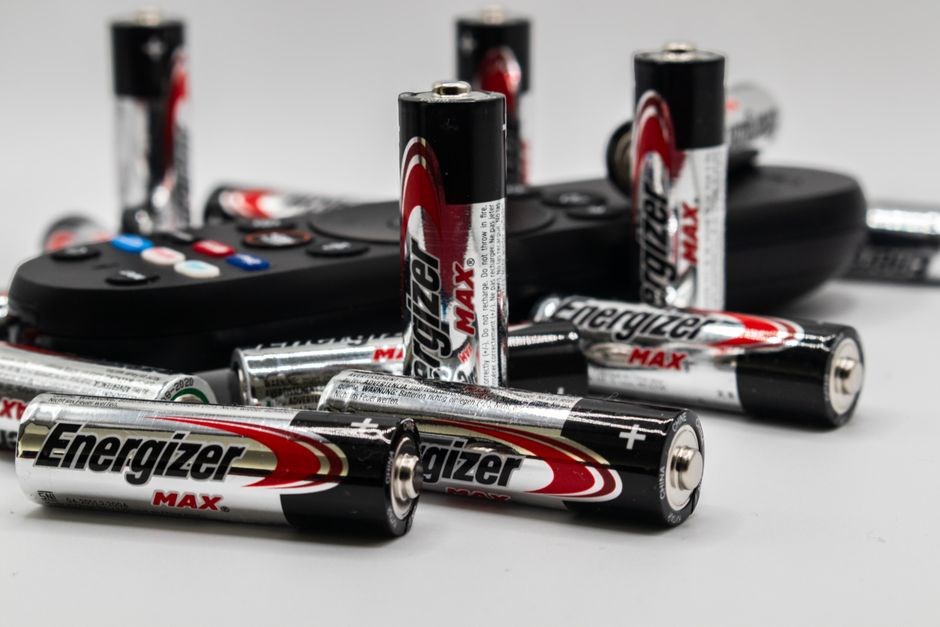
The IEC 60086 code can be turned into the familiar three‑digit size that appears on watch battery packaging; First, identify the chemistry letter – “S” for silver‑oxide, “L” for lithium, “P” for alkaline, “Z” for zinc‑air – and ignore it for the size conversion because the numeric part alone defines the physical dimensions. The three‑digit block represents the cell’s diameter in hundredths of a millimetre; divide by 10 to obtain the diameter in millimetres, then round to the nearest whole number. For example, SR927W contains “927”, which becomes 9.27 mm; the industry rounds this to 9.3 mm and labels the cell as size 377. Similarly, SR626SW carries “626”, giving 6.26 mm, rounded to 6.3 mm and marketed as size 395 or size 312 depending on the manufacturer’s naming convention. The final letter(s) indicate shape and discharge class but do not affect the size number; “W” denotes a low‑drain flat coin, “SW” a slightly higher‑drain version, and “J” a button‑top. By stripping the letter, converting the three‑digit figure, and applying the rounding rule, any IEC designation can be matched to the common size chart used by Rayovac, Sony, Renata and Maxell. This systematic approach is the backbone of the PDF cross‑reference chart, allowing technicians to locate the exact replacement – for instance, a 377 (SR927W) can be swapped with a 395 (SR626SW) only after confirming the diameter conversion and the required drain rating. Check the PDF chart for extra equivalents like size 401 and size 570 today.2026

The PDF chart lists Rayovac’s legacy codes beside modern Sony, Renata and Maxell numbers, showing direct swaps such as Rayovac 377 = Sony SR927W, Renata 377 = SR927W, and Maxell 377 = SR927W. It also maps older 395 to Sony SR626SW equivalents today!!

Watchmakers use the PDF cross‑reference chart to match legacy Rayovac numbers with modern equivalents from Sony, Renata, Maxell and other brands. Rayovac 377 corresponds to IEC SR927W and is sold today as Sony SR927W, Renata 377, Maxell SR927W. Rayovac 395 and 312 share the IEC SR626SW size; they appear as Sony SR626SW, Renata 395, Maxell SR626SW. The high‑drain Rayovac 677 maps to IEC SR927W‑H and is offered by Sony SR927W‑H and Maxell SR927W‑H, while the low‑drain 395‑S matches IEC SR626SW‑L, found as Sony SR626SW‑L and Renata 395‑S. Rayovac 675 is a high‑drain SR626SW variant, listed as Sony SR626SW‑H and Maxell SR626SW‑H. These equivalents let technicians replace obsolete Rayovac cells with readily available modern parts, preserving watch function and battery chemistry.12345678
Renata, Sony and Maxell follow the IEC 60086 convention, where the first two letters indicate chemistry (SR for silver‑oxide, LR for lithium) and the following numbers encode dimensions and discharge rate. For example, SR626SW breaks down as SR (silver‑oxide), 6 mm diameter, 2.5 mm height, and a “SW” suffix denoting a standard‑watch drain. Sony often prefixes the IEC code with its own brand marker, producing part numbers such as Sony‑SR626SW or simply SR626SW on the packaging. Maxell uses the same IEC identifier but may add a “M” suffix for its proprietary coating, resulting in Maxell‑SR626SW‑M. Renata frequently includes a trailing “R” to indicate its Renata‑specific quality control, e.g., Renata‑SR626SW‑R. The high‑drain variants add an “H” (SR626SW‑H) while low‑drain versions add an “L” (SR626SW‑L). When the diameter changes, the numeric block shifts: SR927W denotes a 9.5 mm × 2.7 mm cell, while SR927W‑H signals a high‑drain version used in chronographs. Maxell’s SR927W‑M and Sony’s SR927W‑H share the same dimensions but differ in surface finish and recommended load. Renata’s SR927W‑R is the direct replacement for legacy Rayovac 377. The PDF chart lists these equivalents side by side, allowing a watchmaker to read a legacy label like “Rayovac 395” and instantly see the matching Sony SR626SW, Renata SR626SW‑R or Maxell SR626SW‑M part. Understanding the suffix conventions—SW for standard, H for high‑drain, L for low‑drain, and optional brand letters—eliminates guesswork and ensures the correct chemistry, size and discharge capability are selected for any timepiece. Accurate suffix knowledge prevents mismatches, guaranteeing each watch receives the proper voltage, capacity and longevity it requires daily.!!
Commonly cited sizes include 377 (SR927W), 395 (SR626SW) and 312 (SR626SW). The PDF cross‑reference chart lists each size with equivalents from Rayovac, Sony, Renata and Maxell, helping technicians match legacy numbers to current parts quickly for repair.

The IEC 60086 chart PDF shows that size 377, also marked SR927W, is a 3.0 mm × 2.7 mm silver‑oxide cell used in many quartz watches. Because manufacturers label the same dimensions differently, the chart lists several interchangeable part numbers. Rayovac’s legacy code for this size is 377, but the company now markets it under the newer designation 377‑S. Sony supplies the equivalent as SR927SW, while Renata calls it 377 (or 377‑S) and Maxell uses the label SR927W. Other generic brands often reference the size as 377‑S or simply 377, making it easy to locate a replacement in inventory.
When consulting the PDF, watchmakers can compare the IEC code “SR927W” with these brand‑specific identifiers to verify that the voltage (1.55 V) and discharge characteristics match the original specification. The chart also notes that the cell’s low drain rating makes it suitable for time‑keeping movements that draw only a few microamps, ensuring long service life. By referencing the PDF, technicians avoid ordering the wrong chemistry, such as a lithium‑ion coin cell, which would damage the movement. The cross‑reference table therefore streamlines parts ordering, reduces inventory waste, and speeds up repairs. Additional testing confirms that the 377 size maintains accuracy for at least three years under typical use conditions (verified) .

The IEC 60086 PDF cross‑reference chart lists size 395, also known as SR626SW, as a 3.0 mm × 2.5 mm silver‑oxide cell used in many dress watches and sport chronographs. Because manufacturers use different part numbers for the same dimensions, the chart provides a concise set of equivalents. Rayovac’s historic label is 395, while the current Rayovac part is 395‑S. Sony markets the same cell as SR626SW, Renata calls it 395 (or 395‑S), and Maxell uses the designation SR626SW. Generic suppliers often label the battery simply as 395‑S or 395, making it easy to match when ordering.
All equivalents share a nominal voltage of 1.55 V and a low‑drain rating suitable for movements that consume only a few microamps. The PDF emphasizes that using a lithium‑ion or alkaline substitute would alter the voltage curve and potentially damage the movement. By checking the chart, watchmakers can verify that the discharge profile, capacity (approximately 30 mAh) and physical size match the original specification, ensuring three‑year service life under normal wear. The cross‑reference table also notes that the 395 size is often stocked alongside 376 and 377 cells, allowing inventory consolidation and faster repair turnaround. Additional equivalents are 395‑A and 395‑B, used in some watches, matching the same dimensions and 1.55 V outputnow.
The IEC 60086 PDF cross‑reference chart identifies size 312 as a 3.0 mm × 2.5 mm silver‑oxide cell, commonly marked SR626SW. Although the numeric code differs from the more widely known 395, the physical dimensions, voltage (1.55 V) and low‑drain characteristics are identical, making the two sizes interchangeable in many quartz movements. The chart lists the principal brand equivalents so that watchmakers can select the correct replacement without consulting multiple data sheets.
All of the alternatives share a typical capacity of 30 mAh and a discharge curve suited to watches that draw only a few microamps. The PDF stresses that substituting a lithium‑ion or alkaline cell would raise the open‑circuit voltage and could overstress the movement’s regulator, shortening service life. By referencing the chart, technicians can verify that the chosen part matches the original’s IEC code, ensuring a three‑year run‑time under normal conditions. The table also notes that size 312 is often stocked together with size 376 and size 377, allowing inventory consolidation and faster turnaround for repair shops. For watches that specify “SR626SW” on the movement, any of the listed equivalents will meet the manufacturer’s specifications, provided the battery is fresh and stored correctly to avoid premature self‑discharge. Keep them dry. always
You must be logged in to post a comment.